Safari Planning
The Masai Mara, Done Properly: A Luxury Planning Guide
By Thriveor Concierge Team
June 12, 2026
7 min read
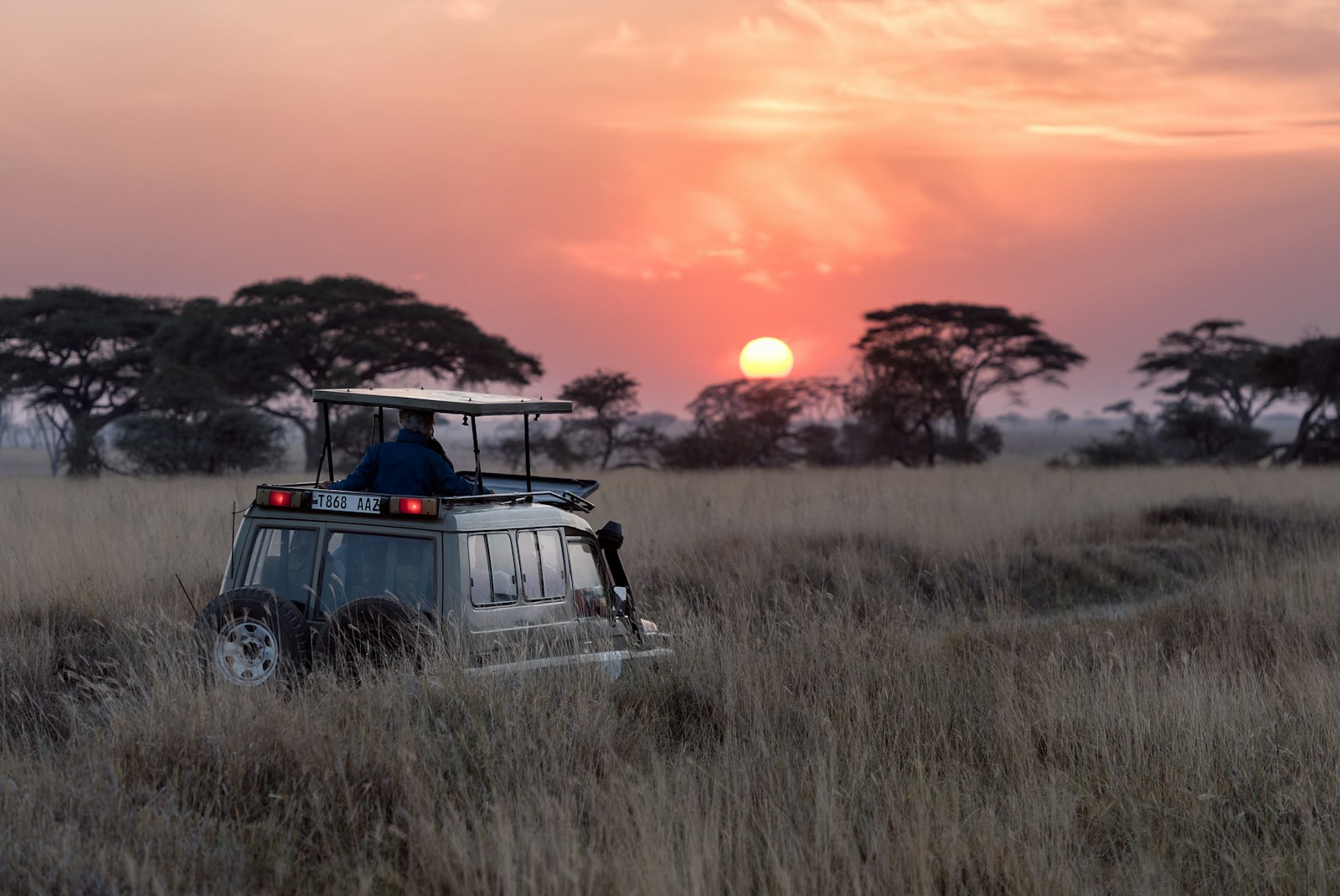
The Masai Mara is one of the few places on earth where the brochure version and the real version actually match. Lions on a kill at first light. Elephants moving like quiet weather across the plains. A sky that goes from charcoal to gold in fifteen minutes. None of it is exaggerated.
What the brochures do not tell you is that the experience varies enormously depending on where you sleep, when you arrive, and who is driving the vehicle. Two travelers can visit the same week and come home with completely different memories — one fighting for a parking spot at a river crossing, the other watching a leopard with her cubs and no other vehicle in sight. The difference is planning. Below is how we think about it.
The Maasai Mara National Reserve is the famous one — the green-on-the-map polygon where the Mara River runs and the wildebeest crossings happen. It is also, in peak season, the busiest piece of safari real estate in Africa. Vehicles must stay on tracks. They cannot drive at night. They cannot go off-road to a sighting. At a good crossing in August, you may share the riverbank with sixty other vehicles.
Surrounding the reserve is a ring of private conservancies — Mara North, Naboisho, Olare Motorogi, Ol Kinyei, Mara Triangle (technically a separately managed part of the reserve, but run with the same discipline), and a handful of others. These are Maasai-owned land leased to a small number of camps, with strict vehicle caps, off-road driving permitted, night drives allowed, and walking safaris on offer. Wildlife densities are excellent — these are the same ecosystems the animals already use — and the experience is profoundly different.
For most luxury travelers, our default recommendation is to base in a conservancy and make day excursions into the reserve when the migration is genuinely on the river. You get the privacy and flexibility every day, and the spectacle on the days that matter.
There is no bad time to visit the Mara, but there are very different times.
January to March is green-season Mara. The plains are emerald, the light is theatrical, resident game is plentiful, predators are active, and rates are noticeably lower. Birding is exceptional. Crossings are not happening, but everything else is.
June to October is the famous migration window. The herds are typically in the Mara from late July through October, with crossings concentrated in August and September. This is also when the reserve is busiest and rates peak. If a river crossing is non-negotiable for you, book this window — and book early, ideally a year out for the best conservancy camps.
November and December bring the short rains. Showers are usually afternoon affairs and pass quickly. Skies are dramatic, camps are quieter, and value returns. Christmas and New Year are an exception — premium rates and full camps.
A note on crossings: even in peak season, a crossing is never guaranteed on any given day. Herds may sit on a riverbank for three days and then cross at four in the afternoon for ninety seconds. Plan a minimum of three full game-driving days in the reserve window to give yourself a realistic chance.
Three nights is the floor. Two is a tasting menu — by the time you have settled in, learned the camp, and started to read the bush with your guide, you are packing. Three nights gives you two full days. Four to five nights is the sweet spot for most travelers: enough time to truly slow down, to take a balloon flight without disrupting your game drives, to do a Maasai-guided walk or a fly-camping night, to let the place work on you.
If you are flying in from far away, the Mara also pairs beautifully with two or three nights elsewhere. Amboseli for elephants and Kilimanjaro views, Laikipia for rhino and a different conservation story, or the Kenyan coast — Lamu, Watamu, Diani — for a few days of decompression on the Indian Ocean. We almost always recommend the latter for honeymooners.
"Luxury" is the most abused word in the safari industry. A camp can have copper bathtubs, a wine cellar, and a spa, and still put you in a vehicle with six other guests on a fixed schedule. Another camp may have canvas walls and bucket showers and give you a private vehicle, a private guide, and the ability to leave at four in the morning if the lions are calling.
The questions worth asking before you confirm a booking:
Some of the most memorable hours in the Mara happen outside the vehicle. A hot-air balloon flight at dawn, drifting silent over herds, ending in a champagne breakfast on the plains. A walking safari with a Maasai guide who reads tracks and tells you, casually, which lioness made them and where she slept. A night drive in a conservancy, spotting servals, aardwolves, the occasional leopard hunting. A bush dinner under more stars than you have seen in a decade.
For travelers with more time, a helicopter day trip to Lake Natron's flamingo flats or a flying excursion to the Ngorongoro Crater turns a Mara trip into something closer to a continental survey. These are not standard inclusions; they are the kind of touches a proper concierge arranges in advance.
Honest ranges, per person per night, all-inclusive (accommodation, meals, drinks, game activities, conservancy fees):
Conservancy fees — typically USD 100–130 per person per night — are not a tax. They are the lease payments that put the land in conservation in the first place and pay Maasai landowners directly. They are the reason wildlife still has space to move here.
Skip the road transfer from Nairobi unless you have a specific reason to take it. It is five to six hours on roads of varying quality, and it costs you a full day in each direction. The scheduled small-plane flights with SafariLink or Air Kenya from Wilson Airport take 45 to 60 minutes and land at airstrips minutes from your camp. For larger groups or tighter schedules, private charter is straightforward and often surprisingly competitive.
The Mara has carried the weight of expectation for sixty years and still delivers. What it asks in return is that you treat it seriously — choose a camp that puts you in the right place, choose a season that matches what you actually want to see, and give it enough days to reveal itself. Done that way, it is not a checklist destination. It is the trip people quietly try to repeat for the rest of their lives.
When you are ready to plan one, tell us what you have in mind. We will build it properly.
Tagged with:
Thriveor Concierge Team
Travel specialist at Thriveor Concierge Group, curating luxury experiences across Africa, the Indian Ocean islands, and beyond.
Every itinerary is prepared personally by a senior partner — with direct coordination on the ground.
Request a Private ConsultationHeld in confidence. Non-disclosure agreements available on request.